
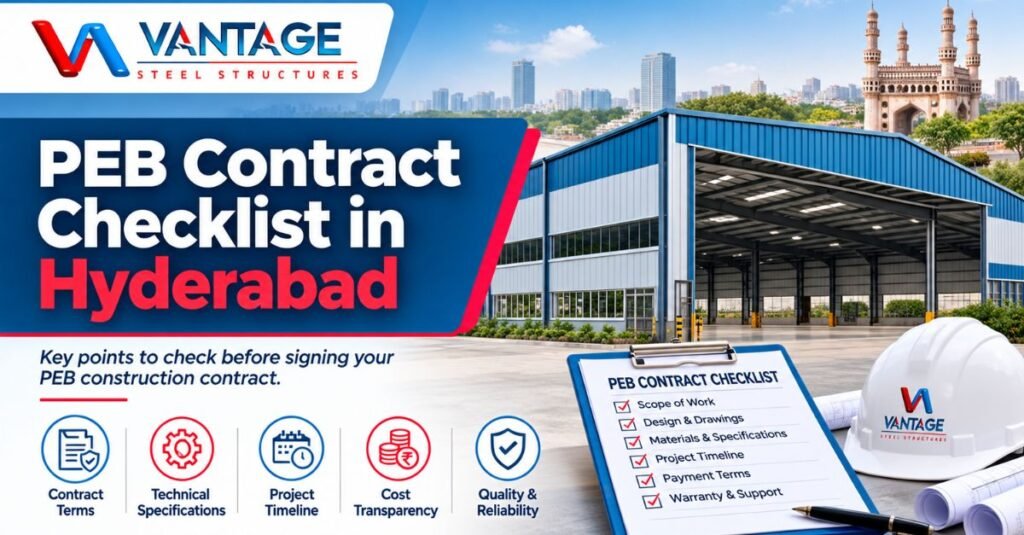
PEB Contract Checklist in Hyderabad: What to Check Before You Sign
A PEB contract is more than a price sheet. It decides what you get, when you get it and who is responsible if something goes wrong. Many disputes in steel building projects start with a vague agreement signed in a hurry.
If you are planning a warehouse, factory or showroom, spend time on the paperwork before the first steel member is cut. This checklist covers what to review in a PEB contract in Hyderabad, so you sign with clear eyes.
What a PEB Contract Should Clearly Cover
Before you read the fine print, gather your own details: site size, building use, height, crane needs and budget. The more precise your brief, the tighter the contract.
Scope of Work
List every item the price includes. A PEB package may cover primary frames, secondary members, roof and wall sheeting, insulation, gutters, doors, windows and erection. Some items, like foundations or civil work, may sit outside it. Write down who handles each one. If you want one team from design to handover, ask if turnkey PEB construction is offered.
Design Drawings and Specifications
Insist on approved drawings before fabrication begins. The contract should state the building size, eave height, bay spacing, roof slope and design loads. It should also name the wind and seismic codes used. Check the steel grade, coating type and sheet thickness. These details decide how the building performs for years.
Clear Responsibilities
Note who gets approvals, who supplies cranes for erection, and who arranges power and water on site. Gaps here lead to delays and extra charges. Agree on site access and storage space too.
Commercial Terms to Review Before You Sign
Price and What It Includes
Ask whether the price is per square foot, per ton or a lump sum. Each method works differently. A per-ton rate can rise if the final steel weight goes up. A lump sum is easier to plan around. Confirm if GST, transport and erection charges are included.
Payment Schedule
Link payments to milestones, not just dates. Common stages are advance, design approval, material dispatch, erection progress and handover. Avoid paying most of the amount before fabrication starts. Keep a small retention until the work is complete and checked.
Variation and Change Orders
Changes will happen. A taller eave or an extra door can alter the cost. The contract should explain how changes are priced and approved in writing. This stops surprise bills at the end.
Termination and Dispute Terms
Hope for the best, but plan for problems. The contract should say how either side can end the agreement and what happens to advance payments and material already made. Include a simple way to settle disputes, such as discussion first, then arbitration.
Delivery, Quality and Warranty Clauses
Timeline and Delay Terms
Get a schedule with dates for design approval, fabrication, dispatch and erection. Ask what happens if the supplier is late. Some contracts include a delay clause. Be fair too: the clause should also cover delays caused by site readiness or late approvals from your side.
Quality Checks and Inspection
Ask how quality is checked during fabrication and before dispatch. A company with ISO 9001 procedures will have a documented process. You should have the right to inspect material and test reports. Vantage Steel Structures, for example, keeps fabrication in-house at its Jeedimetla and Siddipet units, which makes inspection easier to arrange.
Safety and Compliance
Erection work at height carries risk. Ask about the site safety plan, protective gear and insurance for workers and materials. Check that the supplier follows structural and safety standards. A track record of safe man-hours is a good sign.
Warranty and After-Sales Support
Read the warranty line by line. Check what it covers, such as structure, coating or roof sheets, and for how long. Ask who to call if a leak or defect appears after handover. Request maintenance guidelines in writing.
Red Flags and Final Checks Before You Sign
Step back and look for warning signs:
A quote with no drawings or specifications
Pressure to pay a large advance quickly
No clear delivery dates
Missing warranty details
Reluctance to show completed work
Ask to see completed projects similar to yours, and speak with past clients. A good supplier will not mind. Finally, have your legal advisor read the contract. This article is general guidance, not legal advice.
Conclusion
A PEB contract protects both sides when it is clear. Check the scope, drawings, payment stages, delivery dates and warranty before you sign. Compare quotes on equal terms, and write every agreed change down. If you need help understanding what a PEB agreement should include for your project, you can Contact Vantage and speak with the team.